
Jesuit High School Sacramento Sets Standard with Comprehensive Sports Medicine Program
Integrative approach to performance and care supports student-athletes from prevention to recovery
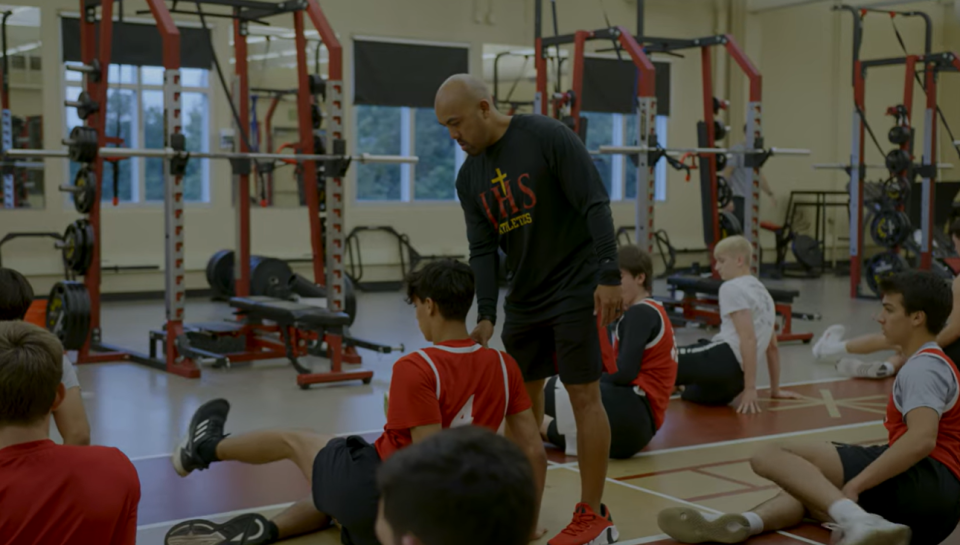
Jesuit High School Sacramento continues to distinguish itself in student-athlete development through a comprehensive and integrated sports medicine program that prioritizes both performance and long-term health. At the core of this program is the collaboration between Head Athletic Trainer Dr. Jamie Superak and Performance Coordinator Jay Nacionales, whose partnership creates a unified approach to injury prevention, treatment, and athletic development.
Jesuit Sacramento is unique among high schools in the greater Sacramento area in maintaining both a full-time athletic trainer and a full-time sports performance coach, an uncommon structure that enables a higher level of care and coordination.
“We’re making sure that we’re not only healing the injury, but making them stronger to prevent the same injury in the future.
Dr. Jaime Superak
While often seen on the sidelines or in the weight room, Jesuit’s Athletic Trainers (ATs) are highly skilled healthcare professionals who provide a continuum of care that goes far beyond basic first aid. From the moment an injury occurs to the final stages of rehabilitation, our ATs are on the front lines—specializing in injury prevention, clinical diagnosis, and emergency management. By integrating medical expertise into daily athletic life, they ensure every student-athlete not only stays in the game but also performs at their peak.
For Superak, collaboration across performance and training is essential to delivering the best possible care to athletes. As head athletic trainer, her role spans prevention, diagnosis, treatment, and rehabilitation across Jesuit’s athletic programs.
Rather than focusing solely on a quick return-to-play her priority is long-term health and durability. Superak works closely with injured athletes throughout their recovery, often seeing them daily as they rebuild strength and stability.
“I have them coming in every single day to do strengthening and proprioception exercises,” she said. “We’re making sure that we’re not only healing the injury, but making them stronger to prevent the same injury in the future. We provide far more intensive rehab and treatment than I think you’d typically see at other high schools.”
While Superak focuses on treatment and rehabilitation, Nacionales leads Jesuit’s strength and conditioning program across all sports. His work centers on building strength and technique and developing resilience throughout the year.
“As the sports performance coordinator, my role is to be in charge of all sports teams regarding their strength and conditioning,” Nacionales said. “We are highly technique-based, and we use a programming model where athletes have to graduate to the next exercise selection.”
The program operates year-round, adapting to the offseason, preseason, and competitive season. This continuity not only improves performance but also reduces the risk of injury.
“The care our student‑athletes receive mirrors what you would expect at the intercollegiate level,” said Athletic Director Hank Weinberger. “What sets Jesuit apart—even compared to many college programs—is the level of integration between athletic training and strength and conditioning. Year‑round, Dr. Superak and Coach Nacionales work in constant partnership: supporting the teams currently in season, while also preparing athletes in the pre‑ and post‑season to be at their strongest when their time to compete arrives.”
Data also plays a crucial role. Nacionales conducts preseason performance testing, while Superak tracks injury trends throughout each season. Together, they analyze that information to refine training and prevention strategies.
“The injury data that we can observe based onJay’s preseason testing, combined with the postseason injury trends, helps guide our strength and conditioning programming,” Superak said. “We’re using it not only to increase performance but also to mitigate the risk of injury.”
Through thoughtful training, intentional rehabilitation, and ongoing communication, Jesuit’s sports medicine team is shaping not only stronger athletes but also more prepared young adults. Whether students go on to compete at the collegiate level or pursue other paths, the habits they build, discipline, resilience, and a commitment to improvement, will serve them long after their time on the field comes to an end.