Opinion: Too Far Gone? NIL, The Transfer Portal, and the Downfall of College Football
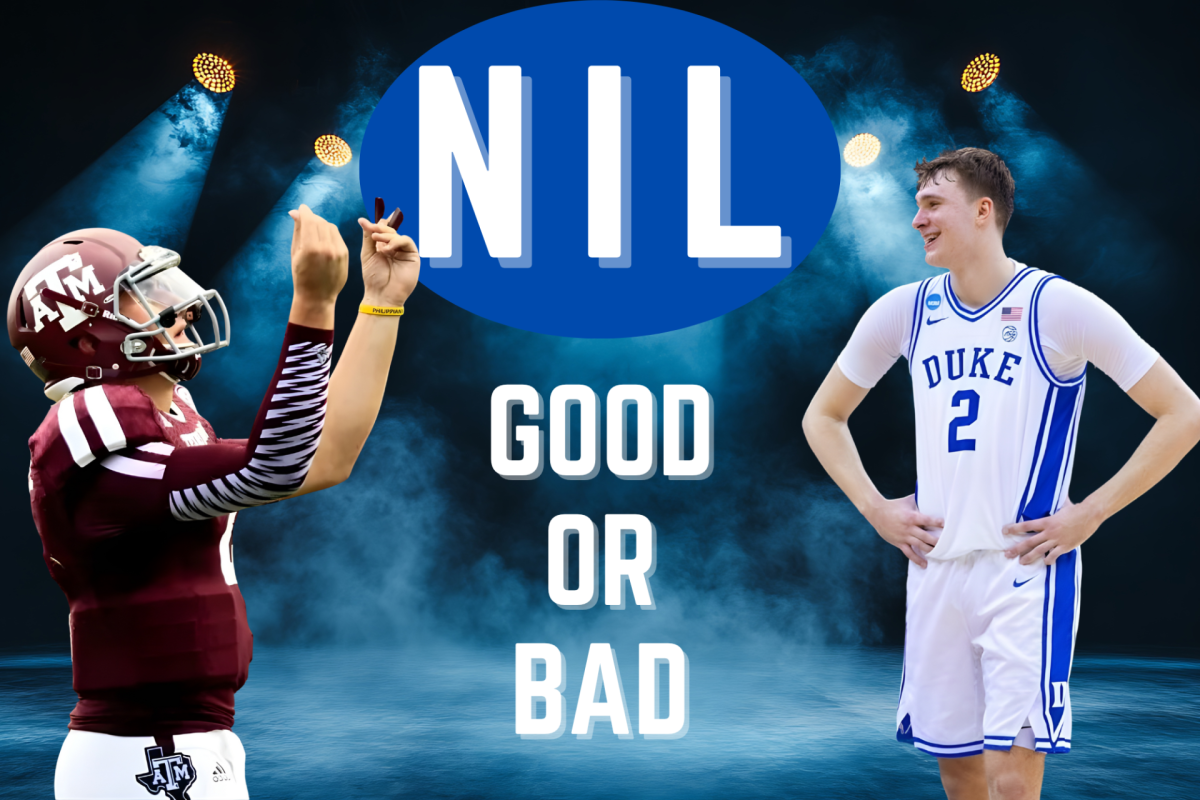
Through the introduction of Name, Image, and Likeness (NIL) revenue to college football, a sport once defined by the development of young men as players and as people has been corrupted into a player-centric circus that promotes greed and rewards disloyalty.
Control of a program’s success no longer lies in the hands of coaches, but rather in the pockets of their school’s boosters. Programs once built on tradition and reputation have fallen, and new, well-funded programs have risen from the ashes. NIL has made an amateur sport pay-to-win, and it must be amended and limited before it causes even more harm than it already has.
Let me be clear: I do think that college players should be able to receive money from endorsements and sponsorships negotiated independently. But, do I think that college players should be able to receive direct payments from the institutions they attend? No.
The unfortunate situation college football is in right now is the doing of the organization that oversees it, the NCAA. Open auctions for the services of players and NIL-inspired “transfer culture” are a direct result of gross mismanagement and poor oversight by the NCAA and its leadership.
In the organization’s official statement regarding the introduction of NIL in 2021, the NCAA announced, “while opening name, image and likeness opportunities to student-athletes, the policy in all three divisions preserves the commitment to avoid pay-for-play and improper inducements tied to choosing to attend a particular school.” Any person who has watched a single college football game in the last four seasons can see how laughably untrue this statement has become. Replace the word “avoid” and add “promote”, and you get a simple explanation of the state of college football in 2026.
NIL has turned recruits from looking for the best situations for their own success to the college that will simply give them the most money. Can you imagine a 4-star recruit 20 years ago choosing to attend Vanderbilt over Alabama? A player committing to a school also used to mean three to four years of loyalty to that school. Now, it means a one-year commitment to a school and either renegotiation of a higher salary or a transfer to a different school for the following season.
In the current climate of NIL and the portal, the vast majority of players would not voluntarily wait their turn at LSU or Georgia when they could start as freshmen at Tulane or James Madison. This has led to a massive loss of depth across the board in the sport and a decrease in the number of players who stay at the same school for multiple years.
Now, it is incredibly rare for a player not to attend multiple schools in the era of NIL. Indiana’s 2025-26 National Championship team contained a Heisman-trophy winning QB, a 2025 Bilentikoff (top WR) finalist, and 7 other All-Big 10 players, all of whom were transfers. It’s no wonder that Indiana’s first and only football National Championship came after the introduction of NIL. Before 2021, they could not compete with the history and tradition of rival institutions. But now, relying on the checkbooks of their alumni, they have found success.
Transferring to multiple different schools also has obvious impacts on a student’s education, with few seeing value in attending classes at a school they are set on leaving by the end of the football season. Players are not just students, or even student-athletes; they are mercenaries for hire. Again, these are college students, not professionals.
Some simple changes can be made to stop these problems at hand. First, the transfer portal needs to be used for serious situations only, and not as a tool to leverage higher contracts and salaries. Clemson head football coach Dabo Swinney has proposed a simple, common-sense model to fix the systemic problems in the process. His proposal goes as follows:
1) Players receive 1 “free” transfer per their years of eligibility + 1 more allowed transfer if the player’s head coach is fired.
2) For all other transfer players, they must sit out 1 season.
3) A 10-day portal window is created in early March, which prevents mid-season tampering and departure of coaches during the season.
Boom. 3 lines and the transfer portal is fixed. Now onto the more pressing issue, NIL.
This is what I propose:
1) Direct school-to-player payment, in any form, is prohibited.
2) Players can still receive money through endorsements, just not in the form of salaries from institutions.
3) Schools cannot tamper with endorsements/facilitate endorsements to players; they must be negotiated by the player and their agent alone.
In this model, players can still make money, but not from the schools they attend. Recruiting returns to being based on physical factors and not financial ones. No more bidding wars and complex NIL negotiations. Problem solved.
With NIL as a part of the sport, the teams that spend the most money on players will win. It has turned the entire focus of an amateur sport onto making money, neglecting loyalty to an institution. It will take accountability and reflection, but if the NCAA wants to keep its sport watchable, there must be major reforms. There are ways to fix this problem, but the clock is ticking, and action must be taken before it is too late.