
What can we learn from Regis High School?
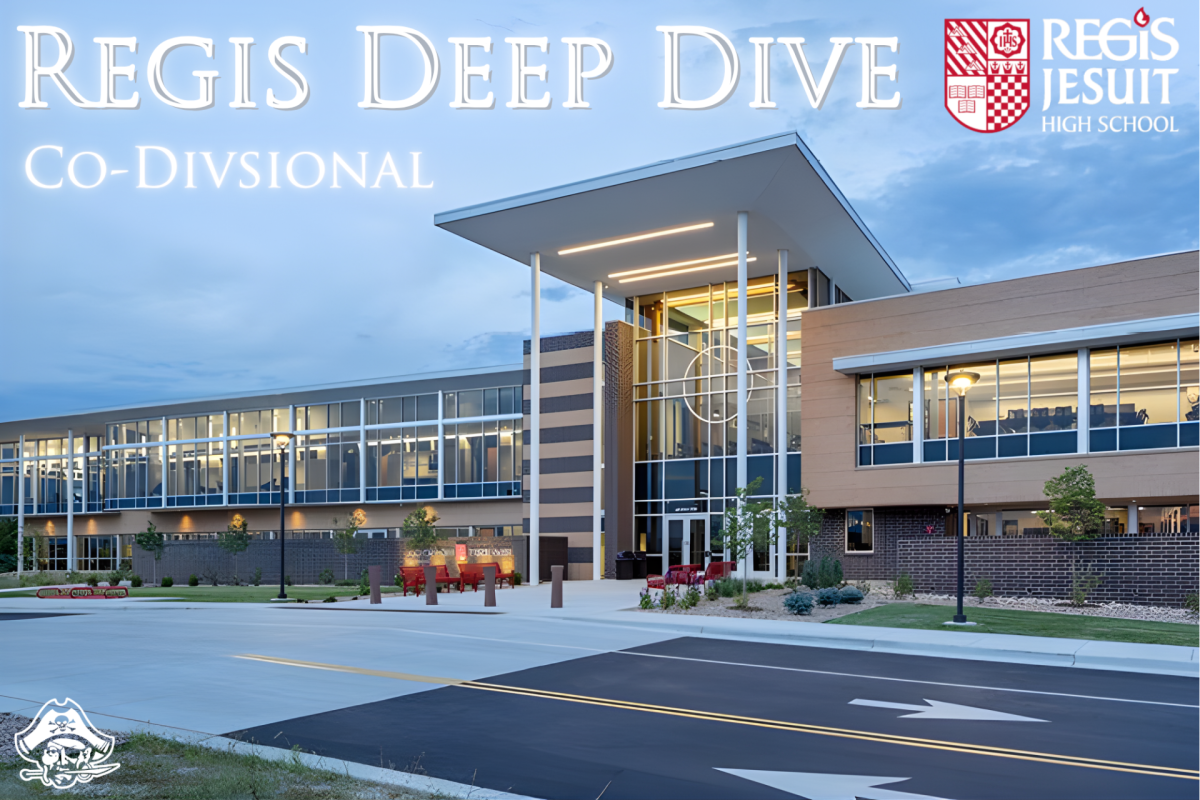
With the news that Jesuit High School Sacramento is transitioning from an all-boys school to a co-divisional model in the 2027-28 school year, questions have abounded, with many in the community confused as to what a co-divisional school even looks like. Regis High School – a formerly all-male Jesuit high school in Denver, Colorado – has frequently been cited as a successful example of a co-divisional Jesuit high school in the United States.
In the fall of 2003, Regis High School transitioned from a single sex, all-male model to co-divisional. They did so after a request from the archdiocese to create more spaces for Catholic girls education. Since that move, the school has grown its student body dramatically, from enrollment in the hundreds to over 1,600 students now enrolled.
Regis High School carried out its transition differently than Jesuit plans to. When the Regis plan was announced, they built a new building to house the boys division, with the girls division moving into the pre-existing building. Jesuit plans to weave the girls division into the existing campus. In recent years, Regis has softened the dividing line between divisions with the addition of more “co-enrolled” spaces.
As Jesuit Sacramento’s board planned out their co-divisional transition, they turned to Regis to serve as an example, in an attempt to learn from the mistakes Regis made in the beginning.
“We’ve been in dialogue with them [Regis] for a long time,” said Principal Dr. Michael Wood ’99. “We learned from their mistakes: The things that they did wrong, that they admit doing wrong, that they’ve had 20 years to solve, that they warned us about.”
Regis High School English and P.E. teacher Ms. Sydney Timme believes that one such mistake was too strict a delineation between the boys and girls divisions.
“Initially, you may as well have painted the line down the center of campus,” Ms. Timme said. “Boys were afraid to go into the girls’ division building because they felt like they would get in trouble. They would get in trouble because people would say, ‘what are you doing in this building?’ Girls felt unwelcome in the boys division building. Once adults identified this isn’t healthy or helpful, [the question became] how can we start to smooth some of that for our students to have a better experience.”
As the years went on, creating a “better experience” meant identifying places where male and female students could interact, such as Regis’s Steele performing arts center, or their state-of-the-art science center, as well as co-enrolling certain classes.
“There was a real desire on the part of school leadership for boys and girls [to not] just have a social relationship with each other,” Ms. Timme said. “We felt that kind of reinforced some stereotypes. [...] Every senior has had at least 2 or 3 co-divisional mixed gender classes in their senior year and maybe one in their junior year. So it feels like we’ve sort of scaffolded the shared experience in the classroom and I think that’s been really important.”
At Regis, Mr. Tricco feels that co-divisional education strikes an effective balance between single-sex and coeducational models.
“Every year we do exit interviews with [graduating seniors], and they say one of their favorite parts about Regis Jesuit is the co-divisional model,” Mr. Tricco said. “They love the fact that they were in classes with all boys or if they’re women, with all girls. And they do say by senior year they do look for more opportunities to engage in classes and spend more time with the opposite sex. And part of that’s just to get ready for what they feel is next.”
Though this change may seem extreme and there may be growing pains, Ms. Timme feels that this kind of evolution can create something more inclusive and better than before, like Kairos.
“For us to remain viable, we have to evolve,” Ms. Timme said. “Sometimes that kind of thing takes a real hard turn to make that happen. I remember teaching juniors way back when we were just a boys school and them saying, ‘Kairos would never work for girls’. Well, the model of Kairos comes from a prison retreat program, and I’m sure that there were prisoners who said, ‘this will never work for high school boys.’ Change is hard and the presupposition of goodwill is the hardest, some of the hardest work that we will do. I just think that the future is opening our arms wide and that is not going to be without pain in the transition.”