
The Counter-Strike market fiasco
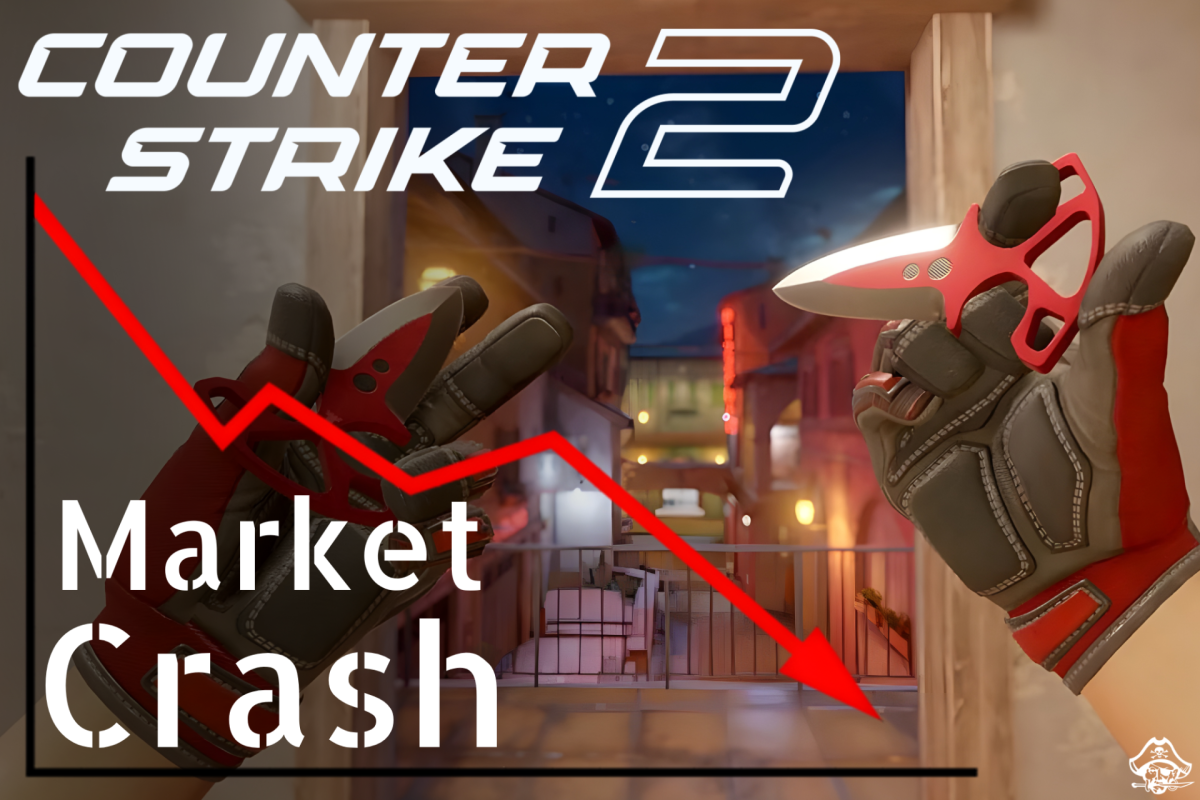
On Oct. 22, 2025, Valve Corporation released an update to Counter-Strike 2 that would forever change the dealings of a six-billion-dollar free market. So what is this market? Is it stocks? Is it Valve’s online video game store, Steam? It turns out it’s neither – it’s Counter-Strike skins.
In its over 11 year history, the “Counter-Strike 2” skin market reached a monumental market cap of $6 billion. Yet, after a seemingly innocent update, the total market value was cut in half to just 3 billion dollars in the course of 24 hours.
What could have possibly caused this sharp drop? Why did Valve decide to make such a decision? Will the market recover?
A little history on Counter-Strike is needed. In 2014, when the Arms Deal update launched live on “Counter-Strike: Global Offensive” servers, skins could be unlocked through loot boxes, where you only had a 0.26% chance of receiving a knife skin, the rarest and most coveted item in the game. Over the years, the ability to trade-up – where you can trade 10 skins of the same rarity to one skin of a higher rarity – were added.
However, for all of the game’s history, players were unable to trade-up Covert skins – the second highest rarity – for one knife skin. Because of this restriction, knife skins became incredibly valuable, and could sell for thousands of dollars on third-party websites.
For the most part, Valve has been very hands-off about the market. Over the years, as knife skins have become ludicrously expensive, Valve has done nothing to stop it. This is why many investors have come to trust the skin market, because the company was known for maintaining market stability and avoiding interference in the third-party marketplaces.
This is exactly why, when Valve updated the game to allow players to trade up Covert skins to knife skins, most players lost faith in the market and panicked, selling the majority of the knife skins in circulation. If players could now trade up into these skins, they become much less rare, causing their value to plummet.
Knife skins worth thousands of dollars just 12 hours before the event lost 50-60% of their value immediately. In one particularly extreme example, the inventory of the popular German streamer OhnePixel plummeted from $1.5 million to only $200,000. Many called it the doomsday of the game.
However, it’s not all bad news. It seems that the casual player base got a good deal in this update. Now that players can trade Covert skins up into knives, Covert skins have exploded in value, reaching a $40 minimum. With this huge hike in price, players have been able to sell formerly cheap skins in their inventory for massive profit.
Although the market seems to have hit a bottom from which it may never recover, the market cap has increased over the past few days since the update. Has this update killed the skin market? It is hard to say. What can be said, however, is that Valve has made hundreds of millions off this one update from their 15% Steam market fees, now that many players panic-sold their skins on the Steam marketplace.
Yet, for the playerbase, Valve’s profit margin does not matter. What matters is if investors in the game will keep the boat floating or let it sink. The market solely relies upon investors buying the skins for them to retain value, as it is apparent that a $20k knife skin has no value if no one is willing to buy it for that price. Only time will tell if Valve has ruined their market, or given it a speed bump from which it will recover.